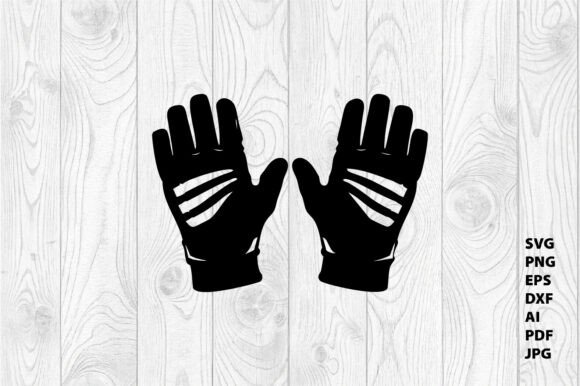
Football Gloves Silhouette Vector Design Review
As a professional embroidery digitizer and product reviewer, I approach every new graphic asset with a specific question: will this actually stitch out cleanly on real fabric? When evaluating the Football Gloves Silhouette Vector Design, my immediate focus is on the translation from screen to needle. This design features a pair of black gloves with white stripes, isolated on a white background. While marketed as a versatile vector for print-on-demand and digital use, its potential as a machine embroidery design requires a critical eye toward contrast, density, and application.
The silhouette style is inherently forgiving for digitizing because it relies on shape rather than intricate shading. However, the specific colorway—black gloves with white stripes—presents a unique challenge and opportunity for embroiderers. In my experience testing similar sports graphics for custom apparel and team merchandise, high-contrast designs like this are excellent for visibility but demand precise stabilizer choices to prevent the dark thread from distorting lighter fabrics or the white stripe details getting lost in the black fill.
Real-World Application: The Custom Team Tote Bag
To truly judge the viability of this Football Gloves Silhouette Vector Design, I mentally prototyped a project that bridges personal gifting and small business inventory: a custom canvas tote bag for a youth football league fundraiser. Tote bags are a staple Etsy seller item and a practical handmade product that gets heavy use.
In this scenario, the silhouette serves as a bold focal point. Because the design is isolated on a white background, it integrates seamlessly into printable mockups for pre-selling before a single stitch is placed. For the physical embroidery project, the solid black areas would likely utilize a fill stitch with a slight texture to reduce stitch count and prevent the canvas from becoming too stiff. The white stripes, depending on their width in the vector file, could be executed as negative space (leaving the canvas exposed) or as a contrasting satin stitch. If the stripes are thin, I would advise converting them to running stitches or appliqué to avoid registration issues where the white thread sinks into the dense black fill.
This specific use case highlights why checking the original vector lines is crucial. A graphic meant for print might have stripes that are visually perfect at 300 DPI but physically impossible to stitch at 4 inches wide without modification. As an embroidery file, this design works best when the user understands how to adapt those crisp vector lines into thread paths that respect the limitations of fabric tension.
Versatility Across Apparel and Decor
Beyond tote bags, this silhouette carries a strong athletic aesthetic that translates well across various categories in the Crafts sector. For sweatshirt embroidery, the bold shape holds up beautifully against fleece textures. The isolation of the image makes it easy to center on a chest or place on a sleeve without needing to mask out complex backgrounds. This is particularly valuable for commercial embroidery businesses fulfilling bulk orders for teams or camps, where consistency and speed are paramount.
For smaller applications, such as baby embroidery on bibs or nursery decor, the silhouette can be scaled down effectively, provided the white stripe details remain distinct. Silhouette designs often age better than detailed portraits because they read clearly even at smaller sizes. I have also seen this type of Graphics asset used successfully for embroidered patches. The solid shapes create clean merrowed edges, making the Football Gloves Silhouette Vector Design a strong candidate for iron-on patches sold as small shop products.
When considering holiday embroidery or personalized gifts, this design offers a neutral, sporty base that can be customized with names or numbers below the gloves. Because it lacks seasonal colors like red or green, it remains sellable year-round, maximizing the ROI for creative entrepreneurs building a permanent catalog of design assets.
Critical Considerations for Stitching Success
While the design is versatile, there are specific environments where caution is necessary. The high contrast between black and white elements means thread colors must be managed carefully. Stitching dense black fill on white fabric requires adequate stabilizer to prevent show-through or puckering. Conversely, if you are stitching this on black fabric, the white stripes become the primary visual anchor. In this case, you must ensure the black fill has enough underlay to create a smooth foundation so the white top stitches do not sink and disappear.
Fabric texture plays a massive role here. On smooth cotton or polyester performance wear, the silhouette will look sharp. On highly textured fabrics like terry cloth or minky, the fine details of the glove fingers or stripes may get lost. For these materials, I recommend simplifying the design or using an applique design technique where the glove shape is created with fabric rather than thousands of fill stitches.
Be mindful of hoop size limitations. Silhouettes can sometimes be deceptively large. Always verify the dimensions of the digital embroidery file before purchasing or downloading. If you plan to use this for caps or curved surfaces, the flat nature of a standard silhouette vector may require distortion correction to wrap properly around the brim area without gapping. Additionally, check the licensing terms explicitly. While the description mentions print-on-demand suitability, confirm whether the license extends to selling finished embroidered goods versus just the digital files themselves. Protecting your craft business starts with clear usage rights.
Designer Notes for Professional Results
Before listing any finished product featuring this design, adhere to these practical testing protocols:
- Test on Scrap Fabric First: Never run a new design directly on a client’s garment. Test the stitch density and registration on a scrap piece of the exact material you intend to use.
- Evaluate Contrast in Natural Light: Screen brightness can be deceiving. Print a black-and-white mockup or stitch a sample to ensure the white stripes are visible against the black fill in real-world lighting conditions.
- Check Small Details: Inspect the vector nodes. Are the fingertips rounded or jagged? Sharp corners in vectors often translate to thread breaks or bulky knots in embroidery. Smooth out any aggressive angles in your digitizing software.
- Verify Stabilizer Pairing: For the black fill areas, use a cut-away stabilizer for knits and stretchy fabrics to maintain shape integrity over time. For woven fabrics like canvas tote bags, a tear-away may suffice, but test for durability.
- Mockup Both Light and Dark Backgrounds: Since this is a high-contrast design, create printable mockups on both white and black garments. This helps customers visualize the final result and reduces return rates due to unmet expectations.
- Confirm Licensing for Commercial Use: Re-read the product description regarding "Print-on-Demand" versus physical product sales. Ensure your intended use aligns with the creator's terms before scaling production.
Final Verdict on Value and Usability
The Football Gloves Silhouette Vector Design represents a solid foundational asset for makers and decorators. Its strength lies in its simplicity and thematic clarity. It avoids the clutter that often plagues sports graphics, making it easier to digitize and faster to stitch. For an Etsy seller or boutique owner, this efficiency translates to lower production costs and higher margins.
However, its success depends entirely on the user's willingness to treat it as a starting point rather than a finished solution. The transition from a flat vector graphic to a tactile personalized gift requires technical adjustment. By respecting the interplay of thread tension, fabric choice, and color contrast, this design can elevate your product line from generic to professional. Whether you are creating team spirit wear, nursery accents, or commercial merchandise, this silhouette offers the visual impact needed to capture buyer engagement, provided it is executed with the precision that only real-world embroidery experience can dictate.