Custom Football Name Svg: An Embroidery Review
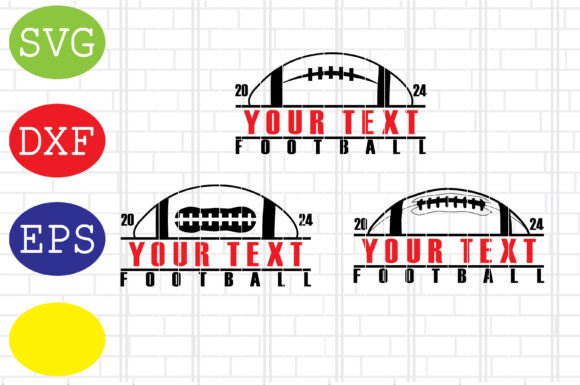
As a professional embroidery designer and product reviewer, I approach every new graphic asset with a specific question: will this actually stitch out well on fabric? When evaluating the Custom Football Name Svg, my focus shifts immediately from screen aesthetics to needle performance. This design package, which includes SVG, DXF, JPG, and EPS files, is marketed heavily toward crafters and vinyl users, but for those of us in the machine embroidery space, it serves as a foundational template. Before loading this into your digitizing software or sending it to production for a client’s custom apparel order, it is vital to understand how this silhouette translates from a digital vector to a tangible, stitched reality.
First Impressions and Design Personality
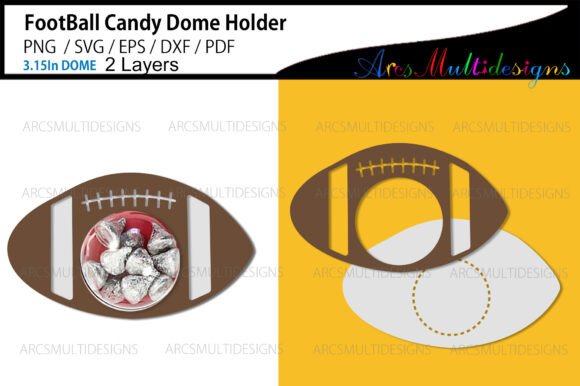
Opening the zip file reveals a clean, bold aesthetic that captures the quintessential American football shape. The visual personality is sporty, nostalgic, and distinctly masculine without being overly aggressive. For an embroidery project, this simplicity is both a strength and a challenge. The smooth curves of the football silhouette suggest satin stitch borders, while the interior laces offer an opportunity for detailed running stitch or fill stitch work. However, because this is primarily a cut file graphic, the lines are optimized for blades, not needles. As a designer, I see a fantastic base for an applique design or a patch, but I also recognize that direct conversion without manual digitizing adjustments could lead to registration issues or excessive jump stitches. The mood is perfect for game day gear, nursery decor, or personalized gifts, provided the technical execution matches the visual intent.
Real-World Application: The Custom Sweatshirt Test
To truly evaluate this asset, I mentally walked through a recent commission: a custom embroidered sweatshirt for a high school senior’s mom. She wanted her son’s name integrated with a football motif for game nights. Using the Custom Football Name Svg as the core element, I assessed its viability on heavyweight fleece. In this scenario, the design performs exceptionally well as a centerpiece. The bold outline reads clearly from a distance, which is crucial for stadium wear. I envisioned placing the name in a varsity font across the center of the ball, using the SVG as a guide for spacing.
For this specific handmade product, the design’s scalability is its greatest asset. Because it is vector-based, I could resize it to fit a 5x7 hoop without losing edge definition. On a sweatshirt, I would utilize this as a layered applique design—using twill fabric for the football body and felt for the name. This reduces overall stitch density compared to a full-fill design, keeping the garment soft and wearable. Customers react positively to this mixed-media look; it feels boutique-quality rather than mass-produced. If you are an Etsy seller or small shop owner, this application demonstrates high perceived value while managing production time efficiently.
Navigating Fabric Challenges and Hoop Limitations
While the design shines on stable fleece, caution is required when applying the Custom Football Name Svg to more temperamental textiles. During my review process, I considered how this graphic behaves on stretchy performance knits or textured terry cloth. The smooth curves of the football can distort easily on four-way stretch fabrics if the stabilizer choice is inadequate. A cut-away stabilizer is non-negotiable here to maintain the circular integrity of the ball during and after stitching.
Small hoop sizes present another consideration. If you are creating baby embroidery items or hat logos, reducing this design below three inches requires careful editing. The lacing details, which look crisp on screen, may become muddy or cause needle breaks if scaled down too aggressively for a cap or onesie. In these instances, I recommend simplifying the internal details or converting the laces to a simple straight stitch. Additionally, dark fabrics demand high contrast thread colors. A navy football on a black shirt will disappear unless outlined with white or metallic thread. Always test your color combinations on scrap fabric first; what works in a printable mockup often lacks the necessary pop in physical thread.
Commercial Viability for Makers and Sellers
For creative entrepreneurs and digital product sellers, understanding the commercial utility of this graphic is essential. The inclusion of EPS and DXF files makes this versatile for mixed-media businesses. You might use the SVG for laser-cut leather patches and the digitized version for embroidered accents on tote bags or aprons. This cross-platform compatibility streamlines workflow for makers who offer both printed and stitched goods.
However, professionalism hinges on licensing and technical adaptation. Before listing any finished product derived from the Custom Football Name Svg, verify the commercial license terms included in your download. Just because a file is available does not automatically grant permission for unlimited commercial embroidery sales. Furthermore, never sell the raw digital embroidery file as your own creation if it is merely an auto-digitized conversion of this vector. True value lies in your unique interpretation—perhaps combining this football silhouette with floral elements for a feminine twist or integrating it into a complex team logo frame. Your brand consistency depends on offering a finished product that looks intentionally designed, not generically assembled.
Essential Technical Notes for Stitch Success
Based on my evaluation, here are practical notes for embroiderers preparing to use this design:
- Digitize, Don’t Convert: Avoid auto-digitizing tools for the final production file. Manually map out stitch paths to ensure the satin stitch border overlaps correctly with the fill or applique material.
- Stabilizer Strategy: Use two layers of medium-weight cut-away for knit fabrics. For woven cottons like tea towels or pillow covers, a tear-away may suffice, but test wash durability first.
- Detail Management: Inspect the lacing area closely. If the gaps between lace stitches are less than 1mm, widen them in your software to prevent fabric perforation or puckering.
- Mockup Testing: Create black and white mockups before stitching. This removes color bias and forces you to evaluate the design based solely on texture and contrast.
- Wash Testing: If producing items for frequent washing (like baby clothes or kitchen towels), perform a wash test. Applique edges should be secured with a tight satin or blanket stitch to prevent fraying over time.
- Thread Contrast: Ensure at least a 40% luminance difference between thread and fabric. Tone-on-tone embroidery with this silhouette often fails to read visually unless lighting is perfect.
Final Verdict for Embroidery Professionals
The Custom Football Name Svg is a robust starting point for seasonal crafts and personalized sports merchandise. Its clean geometry lends itself beautifully to applique, patches, and bold apparel decoration. However, success requires treating it as a design asset rather than a ready-to-stitch solution. By respecting the technical demands of machine embroidery—from stabilizer selection to stitch density management—you can transform this digital graphic into a premium handmade product that delights customers and withstands real-world use. Whether you are crafting a holiday gift or stocking your Etsy shop for football season, this design offers excellent potential when executed with professional care and attention to detail.